Planning
How Long Does It Take to Build a House in Ghana? A Stage-by-Stage Timeline
Realistic timelines for building a house in Ghana, from design and permits to roofing and finishes, plus how rain, funding and design affect them.
Key takeaways
- A typical 3–4 bedroom home takes 8–14 months of construction, plus 1–3 months for design and permits.
- Consistent funding is the single biggest factor in keeping a build on schedule.
- Southern Ghana has two rainy seasons (roughly April–July and September–November); plan earthworks and roofing around them.
- Finishing often takes as long as the structure, so plan and order finishes early.
"How long will it take?" is the second question every client asks, right after "how much will it cost?". The honest answer: a well-planned, well-funded family home in Ghana typically takes 9–17 months from first drawing to handover. Here is where that time goes.
Typical timeline at a glance
| Stage | Typical duration |
|---|---|
| Design and 3D visualisation | 3–8 weeks |
| Bill of Quantities and contractor selection | 1–3 weeks |
| Building permit | 30–90 days (often overlaps with the above) |
| Site preparation and setting out | 1–2 weeks |
| Foundations and substructure | 3–6 weeks |
| Superstructure (walls, columns, slabs) | 2–5 months |
| Roofing | 3–6 weeks |
| Mechanical, electrical and plumbing | 4–8 weeks (overlapping) |
| Finishes | 2–4 months |
| External works and handover | 3–6 weeks |
Stage by stage
Design and approvals (1–3 months)
A good design takes several rounds: concept layouts, 3D views, then detailed permit and construction drawings. In parallel, a quantity surveyor prepares the Bill of Quantities. The building permit typically takes 30–90 days once submitted with complete documents.
Foundations (3–6 weeks)
Clearing, setting out, excavation, blinding, reinforcement and concrete pours. Sloping or clay sites take longer. Concrete needs time to cure, so rushing this stage is a false economy.
Superstructure (2–5 months)
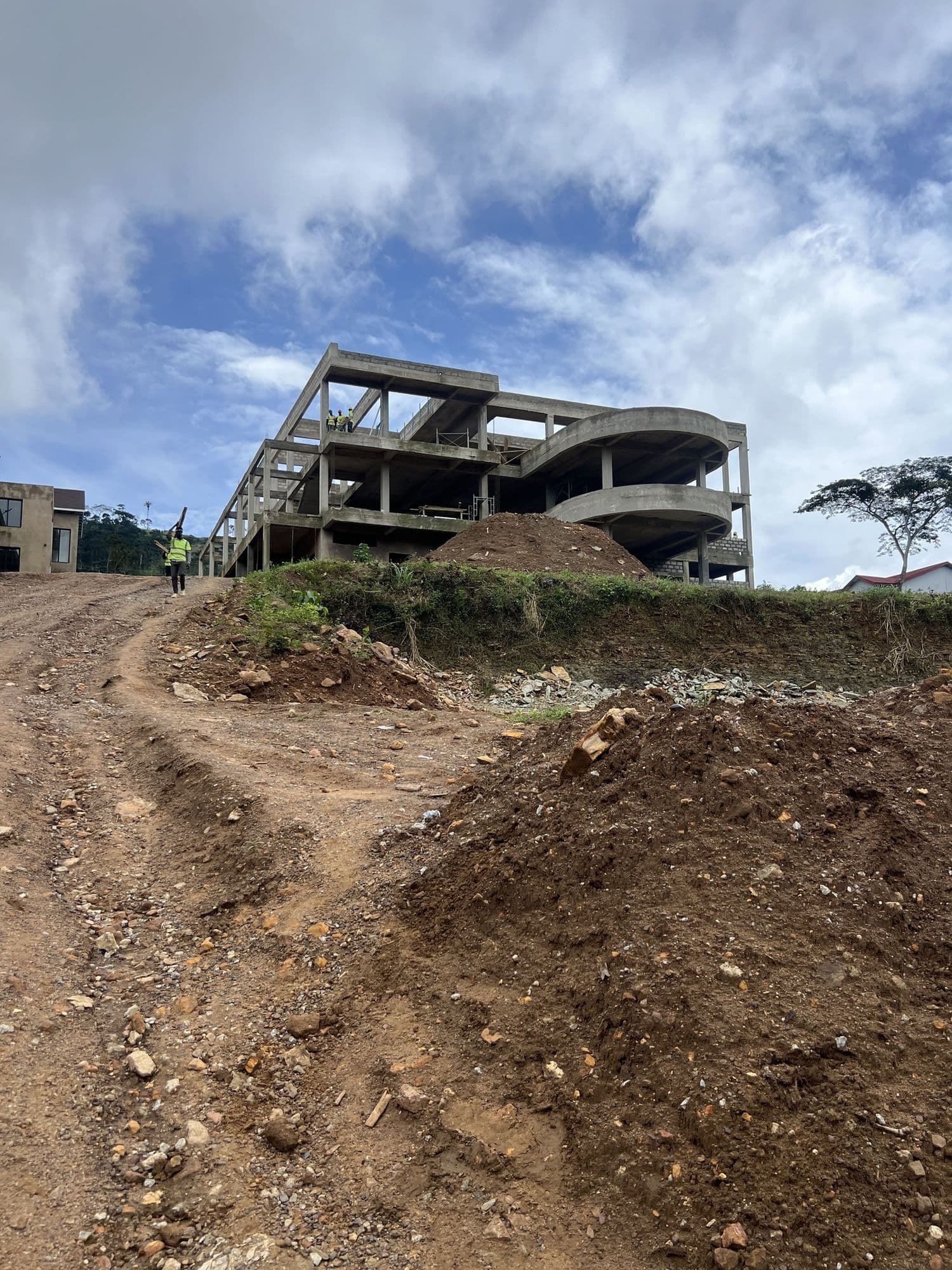
Columns, blockwork, lintels, beams and, for storey buildings, suspended slabs and staircases. Each slab needs formwork, reinforcement, inspection, pouring and curing before work continues above.
Roofing (3–6 weeks)
Roof structure, roofing sheets or tiles, gutters and fascia. Getting the roof on before heavy rains protects everything beneath it.
MEP and finishes (3–5 months)
Wiring and plumbing are installed before plastering; then come screeding, tiling, ceilings, windows, doors, painting, kitchen and wardrobes. Finishing often takes as long as building the structure, because it involves many trades and many decisions.
External works and handover (3–6 weeks)
Boundary wall, gate, paving, drainage and landscaping, followed by a snag list and final inspection.
What speeds up or slows down your build
1. Funding
Nothing affects timelines more. Projects funded in irregular instalments stop and start; each restart costs time and money. Agree a realistic payment schedule tied to milestones before you begin.
2. The rainy seasons
Southern Ghana has a major rainy season (roughly April to July) and a minor one (roughly September to November); northern Ghana has a single wet season (about May to October). Heavy rain slows excavation, concrete work and roofing. Experienced builders plan foundations for drier months and aim to get the roof on before the rains.
3. Design changes
Every change after construction starts causes delay and cost. Finalise your design (and your finishes) before breaking ground.
4. Materials and procurement
Imported finishes can take weeks to arrive. Order long-lead items such as windows, doors and kitchen units early.
5. Permits and approvals
Starting without a permit risks stop-work orders that can halt your site for months.
6. Site supervision
Poorly supervised sites suffer rework. Stage inspections before concrete pours and before covering wiring prevent costly mistakes.
Typical durations by project type
| Project | Construction time (after permits) |
|---|---|
| 2-bedroom bungalow | 5–8 months |
| 3-bedroom bungalow | 6–10 months |
| 4-bedroom storey house | 9–14 months |
| Luxury 5-bedroom home | 12–18 months |
| Kitchen or bathroom renovation | 3–6 weeks |
| Small apartment block | 14–24 months |
Sample programme: a 4-bedroom storey house
Here is an indicative 12-month construction programme, once design and permits are complete. Activities overlap in practice, and weather and funding will shift the dates.
| Month | Main activities |
|---|---|
| 1 | Mobilisation, setting out, excavation, foundations |
| 2 | Ground-floor slab, ground-floor columns and blockwork |
| 3 | Lintels, beams, first-floor slab formwork and pour |
| 4 | First-floor columns, blockwork and staircase |
| 5 | Roof structure and roof covering |
| 6 | Electrical and plumbing first fix, window frames |
| 7 | Plastering and screeding |
| 8 | Ceilings, wall and floor tiling |
| 9 | Doors, windows, kitchen and wardrobes |
| 10 | Painting, electrical and plumbing second fix |
| 11 | Boundary wall, gate, paving and drainage |
| 12 | Snagging, cleaning and handover |
Signs your project is falling behind
- There is no up-to-date programme, or the builder can't explain the next four weeks of work.
- The site is idle for long periods without a clear reason.
- Work keeps stopping for "material shortages".
- The workforce on site keeps shrinking.
- Completed work has to be redone.
If you see these signs, ask for a recovery plan with dates, check that payments match progress, and consider an independent project manager to review the site.
How long do renovations take?
Smaller projects move faster but still need planning: a bathroom upgrade typically takes two to four weeks, a kitchen remodel three to six weeks, and a whole-house renovation two to five months. Read our guide to home renovation costs in Ghana for more.
Building in phases
If you are funding the build gradually, phasing can work well as long as each phase ends at a safe stopping point, such as foundation complete or roof on. Ask your builder for a phased BOQ so each stage is priced and planned.
Keep your project on schedule
On our residential construction projects we set a realistic programme around permits, payments and the seasons, then report progress against it every week. If you have another contractor, our project management service can keep them on track.
Planning your timeline? Talk to our team for a schedule based on your design.
Frequently asked questions
How long does it take to build a 3-bedroom house in Ghana?
With design and permits in place and steady funding, a 3-bedroom bungalow typically takes 6–10 months to build, and a 3–4 bedroom storey house 9–14 months. Add 1–3 months beforehand for design and the building permit.
What is the best time of year to start building in Ghana?
In southern Ghana, starting foundations in the drier months (roughly December to March) lets you get the substructure done before the major rains. In the north, the long dry season from about November to April is ideal for earthworks.
Why do so many houses in Ghana take years to finish?
Mostly because they are funded in irregular instalments. When money runs out, sites stop, sometimes for years. Phased budgeting and milestone planning keep projects moving.